 Annecy Hub
Understanding Recent Trends in Annecy's Tactical Setup
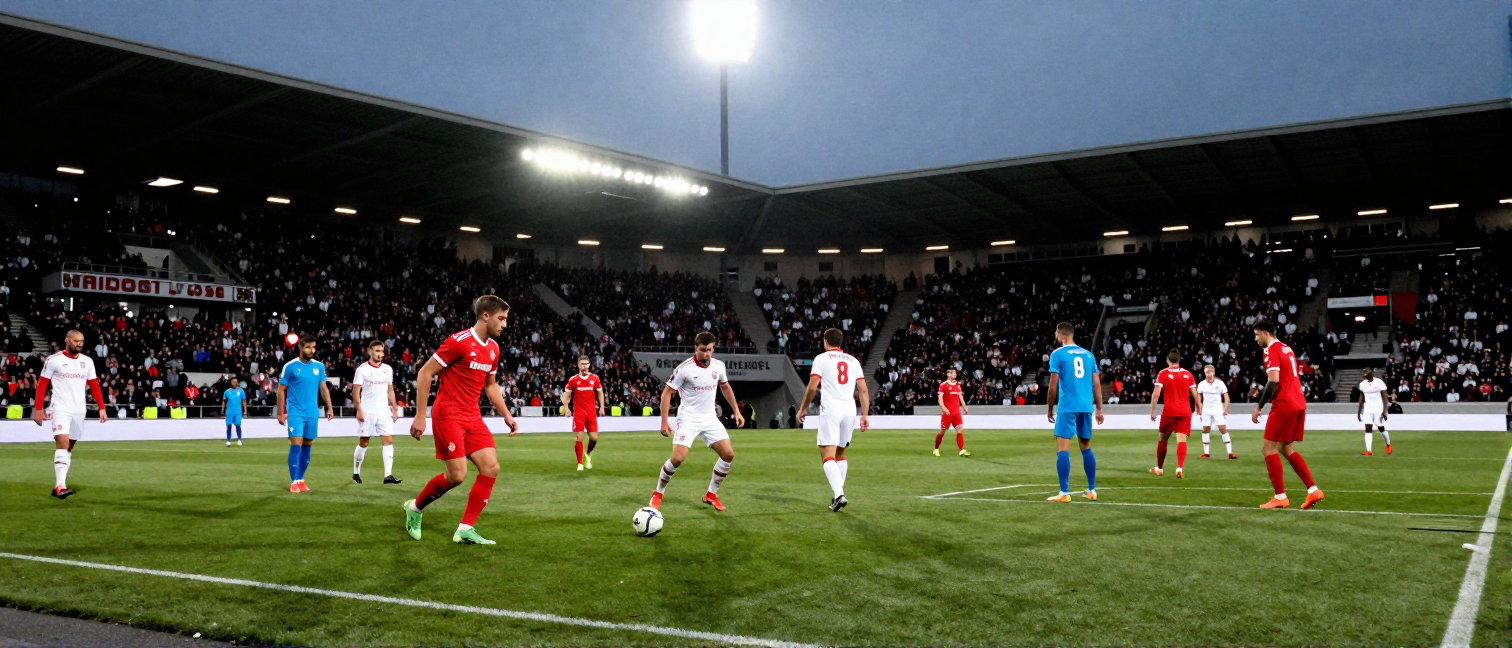
Annecy has faced a series of challenges on the pitch that have exposed vulnerabilities in their tactical setup. Recent matches have shown an inconsistency in maintaining a solid defensive structure while also failing to capitalize on attacking opportunities. The current formation, predominantly a 4-2-3-1, has left the team exposed at times, particularly when transitioning from defense to attack. Individual brilliance from players like Kashi and Callens has not been enough to mask these shortcomings, leading to dropped points that are critical in the competitive landscape of the league.
Defensive Structure: Reinforcing the Backline
One area that warrants immediate attention is the defensive organization. While the 4-2-3-1 formation provides width and attacking options, it often leads to sheer numbers in the midfield, leaving the backline vulnerable to counter-attacks. Adjusting to a 4-3-3 formation could provide better defensive stability. This transition would allow the central midfielders to engage more effectively in defensive duties while maintaining the ability to spring counter-attacks with pace.
Furthermore, having three central midfielders would ensure that the team maintains numerical superiority in the middle of the park, which has been a crucial battleground in recent fixtures. This tweak could also allow for more fluid rotations, enabling players to adapt based on the match situation, thereby enhancing overall team cohesion.
Midfield Dynamics: Encouraging Fluidity
In the current formation, the midfield often appears congested, leading to a lack of creativity and fluidity in attacking play. By introducing a more dynamic midfield trio, Annecy could leverage the strengths of their players better. For instance, pairing Kashi and another central midfielder who excels in ball progression could facilitate quicker transitions and unlock the opponent's defense more effectively.
In addition, encouraging the full-backs to support the attack more aggressively can stretch the opposition's defense and create space for attackers. The interplay between the wingers and full-backs can be critical in breaking down rigid defensive setups, and this should be a focal point in training sessions leading up to the next matches.
Attacking Cohesion: Maximizing Offensive Potential
Offensively, Annecy must focus on creating a more cohesive attacking unit. Currently, the forward line lacks synergy, with players often making runs that do not correspond with the ball movement. Implementing a more structured approach, where forwards are encouraged to interchange positions, could create confusion for opposing defenders and exploit gaps in their formations.
Moreover, fostering an understanding between the central striker and wingers, specifically in terms of movement and timing, can greatly enhance goal-scoring opportunities. Integrating drills that emphasize quick passing and intelligent movement off the ball will be essential for achieving this cohesion.
Conclusion: A Path Forward for Les Rouge et Blanc
As Annecy continues to navigate the league, embracing these tactical adjustments will be critical for their success. By reinforcing their defensive structure, enhancing midfield dynamics, and maximizing offensive potential, Les Rouge et Blanc can reclaim their competitive edge. The upcoming fixtures represent an opportunity to not only implement these tweaks but also to solidify their identity as a formidable team in the league. With the right adjustments, Annecy can look forward to a more positive trajectory in the season.